
Beyond the Basics
Unlocking Pilot Potential with Mental Models and Advanced Training
Hello Aviators!
This edition of the disPATCH is coming to you from Maine this week!
I’m your newsletter PIC, Erin - ski bunny, snow lover, and proud new member of the “I’ve landed on the Alton Bay ice runway” club.
We’ve got some new students joining us for training next week, and we can’t wait to help them level up their skills! Got questions about advanced training or need some advice? Just hit reply—I’m happy to chat!
Last newsletter talked about some tips and pointers for UPRT training (read that here) and this week is a continuation of that. Let’s get into it!
Here’s what’s in today’s disPATCH:
Unlocking Pilot Potential with Mental Models and Advanced Training
Code Share:
Views Worth Sharing: Ice runway

Continuing on from last week: Unlocking Potential Through Mental Models and Advanced Training
By Ben Samples
Integrating Cognitive and Physical Skills
The fusion of mental models, schemata, and psychomotor skills is what ultimately transforms a student pilot into an expert aviator. Cognitive strategies lay the groundwork, while psychomotor skills bring those strategies to life through action. Together, they form a dynamic feedback loop, where knowledge and execution support one another. Advanced training techniques, then, refine this synergy, helping pilots perform under pressure and adapt to the unexpected.
In aviation, learning is a continuous journey—a process of expanding and refining skills that ensures pilots are prepared for whatever challenges come their way. By embracing the power of mental models, visualization, and advanced training, aviators not only enhance their own abilities but contribute to a culture of safety, precision, and excellence. Each flight becomes a testament to the hard work, preparation, and adaptability that define the best pilots in the world.
Expanding Learning in Aviation: The Power of Mental Models and Advanced Training Techniques
Aviation is a domain where expertise saves lives, and effective learning transforms novices into skilled aviators. Expanding one’s learning abilities isn’t just beneficial—it’s essential. Cognitive science and aviation training intertwine in fascinating ways, showcasing the importance of mental models, schemata, and psychomotor skill development alongside advanced techniques like extended-envelope and startle-response training.
The Cognitive Foundation: Mental Models and Schemata
A pilot’s mental model is like a map of the skies, enabling them to anticipate and respond to situations dynamically. For instance, during upset recovery training, the mental model helps the pilot understand the interplay between angle of attack, airspeed, and control surfaces. Schemata—structured frameworks of knowledge—support this process by organizing complex information into actionable patterns. For example, pilots trained in crosswind landings build schemata to intuitively align the aircraft and manage drift.
Visualization and mental rehearsal play crucial roles here. By mentally flying an approach or recovering from a stall in their mind’s eye, pilots create and refine these cognitive structures. It’s akin to rehearsing a symphony before a performance—the brain simulates actions, priming neural pathways for faster, more precise execution in real scenarios.
Psychomotor Mastery in Aviation
The link between thought and action—psychomotor skills—defines an aviator’s ability to operate aircraft safely. These skills are honed through repetition and sensory integration. Picture an aerobatic pilot executing a perfect loop. Their body responds instinctively to tactile feedback from the yoke and visual cues from the horizon, synchronizing movements to maintain control. This embodiment of skill results from deliberate practice and feedback, reinforcing muscle memory and situational awareness.
Advanced Aviation Techniques: Beyond the Basics
Extended-envelope and all-attitude training challenge pilots to master scenarios beyond routine operations. Imagine entering a steep spiral during turbulence—without this training, a pilot might panic. Extended-envelope training equips them to recover safely, while startle-response drills condition their mind to process surprises calmly and systematically.
Visualization complements this by allowing pilots to “fly” extreme scenarios before encountering them. For example, a mental rehearsal of engine failure on takeoff prepares the pilot to act decisively, reducing reaction time in real emergencies.
Bringing It Together
The fusion of cognitive and psychomotor strategies transforms pilots into aviators. Mental models and schemata provide the cognitive blueprint; psychomotor skills bring it to life. Advanced training techniques refine this synergy, enabling pilots to perform under pressure and adapt to the unexpected.
In aviation, as in life, learning is a journey of continual expansion. By embracing these techniques, pilots not only enhance their abilities but contribute to a culture of safety and excellence, ensuring that every flight is a testament to the power of knowledge, skill, and preparation.

Code Share
I finally got our Google review page up and running! If you’ve flown with us, I’d love for you to drop a review and share your experience—help us grow the Patch Aero community!
We’re always gathering codes to share. If you’d like us to share yours, please reply to this email. We’d love to collaborate with you!

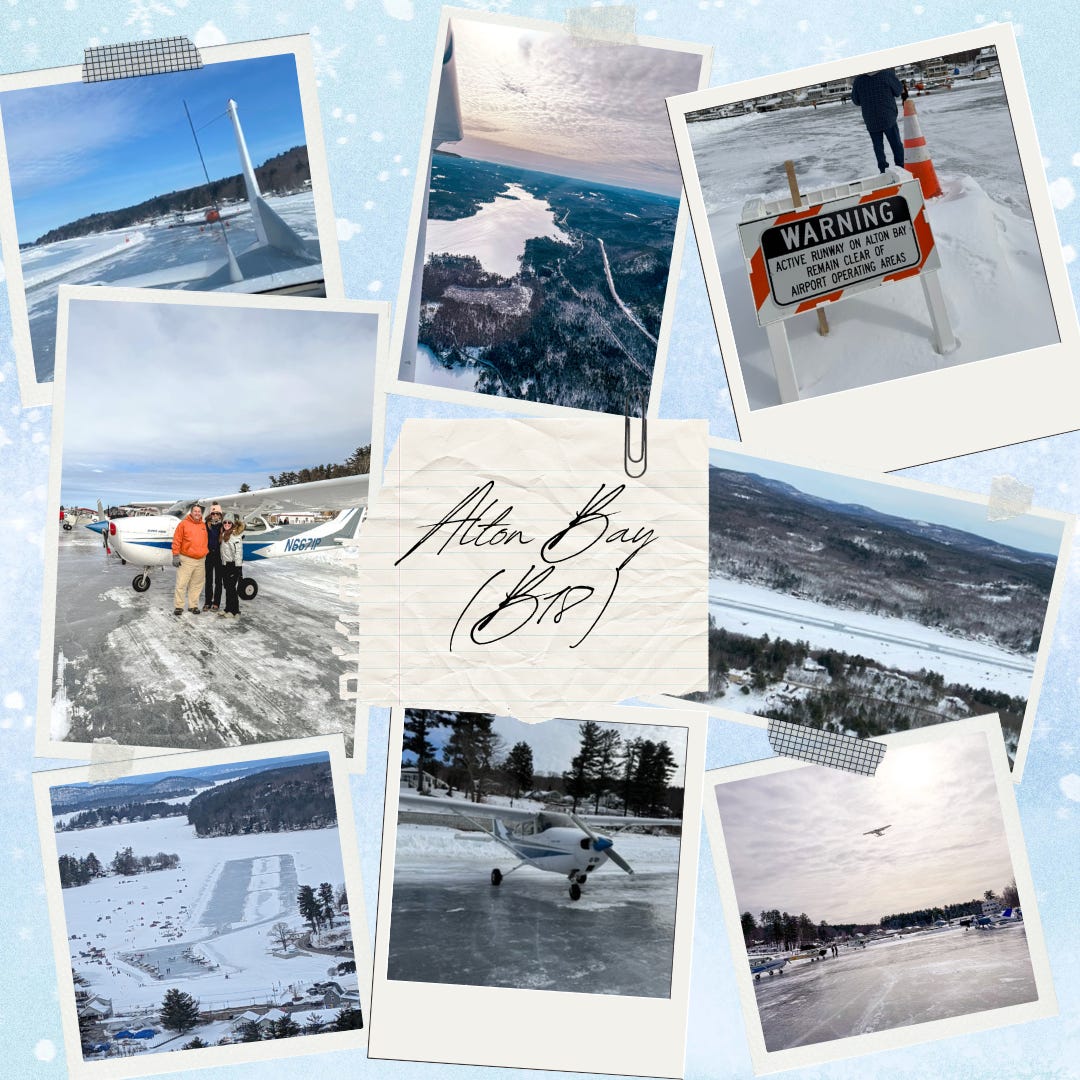
This week’s photo isn’t of or from the Super Decathlon, but this adventure was just too cool not to share—had to let you in on it!
Photos by Eric Meltzer, Erin Meltzer, and Bethany Conrad.
This week’s 'WingTIPS' is all about the mental mindset when it comes to your aviating skills! Whether you're gearing up for some advanced training or powering through toward your first solo, I hope these thoughts give you a little extra fuel for the journey.
See you in two weeks,

P.S.
Last weekend, I went home to Fryeburg, Maine to fly to the legendary Alton Bay ice runway on Lake Winnipesaukee. What an incredibly fun experience! We arrived around 10am with perfect weather, a break in traffic, and the smoothest landing (if I do say so myself). once parked, we wandered around, watched planes land, and grabbed some tasty lunch at the restaurant. The ice was buzzing with action—everyone was out there having a blast!